910
Related Course
- 35 mins
Contents
ToggleSkoolie Toilet Options
The one course you need to help you decide which skoolie toilet is right for your desired skoolie lifestyle.
Living with a dog in a skoolie offers a unique blend of adventure and companionship. Your furry friend can enhance the experience of nomadic life, providing comfort and joy as you explore new places together. Understanding the dynamics of this lifestyle will help you create a harmonious living situation.
When traveling in a skoolie, be sure to consider your dog’s needs. Space, safety, and routine play crucial roles in ensuring that both you and your dog enjoy the journey. By making thoughtful adjustments, you can create an environment where your pet feels secure while embracing the freedom of the open road.
Adapting to life in a skoolie requires some planning, but the rewards are plentiful. From scenic hikes to cozy nights under the stars, your dog’s presence can transform each destination into a special memory. Exploring this lifestyle with a canine companion invites creativity and connection on a whole new level.

Pet Proofing
When living in a skoolie with a dog, pet-proofing is crucial for safety and comfort. Here are key steps to consider:
When living in a skoolie with a dog, it’s important to identify and address potential hazards to keep your pet safe. Cover any sharp edges or corners with padding to prevent injuries in the small, moving space. Electrical cords should be organized and secured out of reach to avoid chewing or accidental entanglement. Additionally, remove or relocate any toxic plants to ensure your dog isn’t exposed to harmful substances.
Effective storage solutions are essential for keeping your skoolie organized and safe for your dog. Store dog food in airtight containers to maintain freshness and prevent pests. Use child-proof locks on cabinets containing cleaning supplies or other hazardous items to keep them out of your pet’s reach. Additionally, designate a specific area for your dog’s toys and belongings to keep everything tidy and easily accessible.
Creating safe zones in your skoolie is essential for your dog’s comfort and safety. A cozy crate can serve as a retreat for your dog, offering a secure space to relax. To prevent accidents, place non-slip mats in areas where your dog might be prone to slipping. Additionally, installing baby gates can help restrict access to certain areas, ensuring your dog stays in safe, designated zones.
When living in a skoolie with a dog, taking outdoor precautions is crucial for your pet’s safety. Make sure doors and windows are dog-proofed to prevent accidental escapes. If space and circumstances allow, set up a fenced area to give your dog a safe spot for outdoor playtime. Additionally, always use a secure leash and collar during walks to keep your dog under control and protected while exploring new environments.
Managing Dogs Comfort & Safety
Creating a comfortable and safe environment for your dog in a skoolie involves careful planning.
Space Considerations
Ensure your dog has a designated area (or two or three) that is just for them, as this is their home too.
Temperature Control
Monitor the temperature inside your skoolie. Use fans or heating pads as needed. Remember, dogs can suffer from heatstroke or hypothermia just like humans.
Safe Restraint
While traveling, your dog should be secured. Use a doggy seatbelt or a travel crate to keep them safe during bumps or sudden stops.
Regular Breaks
Don’t forget to take regular breaks during long drives. This allows your dog to stretch, hydrate, and relieve themselves.
Familiar Items
Bring along familiar toys and blankets. These items can help your dog feel more at home. They can reduce anxiety, especially in new environments.
Hydration & Nutrition
Keep fresh water available at all times. Carry enough dog food for the duration of your travels.
Identify Local Vets
Research and identify nearby veterinary services wherever you plan to stay. This way, you’re prepared in case of emergencies.
Keeping Your Dog Healthy on the Road
Maintaining your dog’s health while living in a skoolie is crucial. Regular routines for exercise, nutrition, and health checks can keep your furry friend happy and fit.
Exercise is essential. Dogs require daily physical activity. Make time for walks and play sessions. Aim for at least 30 minutes to an hour each day.
Nutrition matters too. Choose high-quality dog food suitable for your pet’s age and size. Ensure you have enough supplies while on the road. Consider using an airtight container for storage.
Hydration is vital. Always provide fresh water. Carry a portable water bowl for convenience during travel.
Regular vet visits cannot be overlooked. Identify veterinary clinics along your route. Keep a record of vaccinations and health history. This can help in case of an emergency.
Flea and tick prevention is necessary, especially when traveling outdoors. Use veterinarian-recommended treatments to safeguard your dog.
Grooming should not be neglected. Regularly brush your dog’s coat to prevent matting and skin issues. Check their paws for debris after outdoor activities.
Socialization is important as well. Expose your dog to new environments and people gradually. This helps in reducing anxiety.
Dog Friendly Campgrounds
Finding the right campgrounds is essential when traveling with your dog. Many campgrounds welcome pets, offering a great environment for both you and your furry friend.
What to Look For in Campgrounds
When choosing a campground, consider these features:
- Pet Policies: Always check if pets are allowed and if there are any breed restrictions.
- Off-Leash Areas: Look for campgrounds with designated areas where your dog can roam freely.
- Nearby Trails: Access to walking or hiking trails is a plus for additional exercise.
Long Travel Days with Your Dog
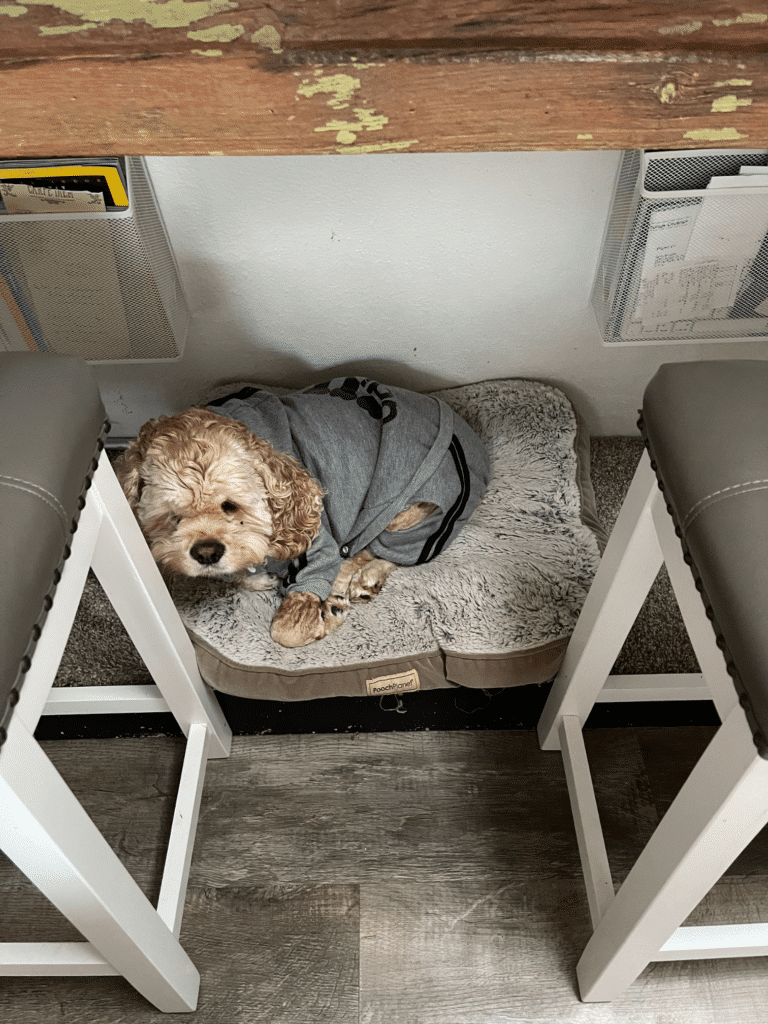
Long travel days can be challenging when you have a dog in a skoolie. Planning ahead is essential to ensure both you and your dog are comfortable. Be sure to schedule breaks every 2-3 hours to allow your dog to stretch and go potty. Also give them food and/or snacks and water when you stop as you can’t offer water as easily when the skoolie is in transit.
Be sure your dog has a comfortable and designated space when traveling. Maybe even consider a seatbelt or crate of some type to keep them safe. Put their favorite blanket and toys in there to ease any of their discomfort and anxiety.
Dog Emergencies
Should anything go wrong with your pet during your travels, having a plan is critical. A solid plan can ensure your pet’s safety and provide peace of mind. Start by keeping essential supplies on hand, such as a first aid kit with bandages, antiseptic wipes, and tweezers, as well as an extra leash, collar, pet-specific medication, and contact information for nearby veterinarians.
Always keep an eye on your dog for potential emergencies, including excessive barking or whining, unusual lethargy, vomiting, diarrhea, or difficulty breathing. If your dog becomes injured or unwell, stay calm to assess the situation, apply first aid if necessary, and contact a vet immediately if the symptoms are severe.
Make sure your dog is up to date and always has a yearly vet check up. Keeping vaccinations current is essential, especially when moving through different regions where your dog may be exposed to new environments, pests, or illnesses. To find a veterinarian on the road, research clinics in the area before arriving at your destination. Building a network of reliable vets during your travels will provide peace of mind and ensure you’re prepared to handle any situation.
Managing Cleanliness
Living with a dog in a skoolie can easily get messy quick. Small space means it gets dirty faster.
To keep things manageable, establish a routine of daily cleaning tasks. Sweep or vacuum the floor daily to remove fur and dirt, wipe down surfaces to prevent stains and odors, and always pick up waste promptly and dispose of during walks to maintain cleanliness. Weekly tasks should include deep cleaning the floors to eliminate embedded hair and grime, washing your dog’s bedding and toys to keep them fresh, and thoroughly inspecting and cleaning the interior of the skoolie to catch any hidden messes.
Make sure you have pet safe cleaners for all the spots your dog has access to. Using mats or rugs at entry points can help catch dirt before it spreads inside, significantly reducing your cleaning efforts over time, just be sure to vacuum this regularly.
Benefits of Living With a Dog In a Skoolie
Living with a dog in a skoolie offers unique advantages that can greatly enhance your lifestyle. Dogs provide constant companionship, helping to alleviate feelings of loneliness during your travels. They also encourage an active lifestyle, as daily walks and outdoor activities naturally become part of your routine. Dogs can also open doors to social opportunities, acting as icebreakers and helping you meet new people at parks or campgrounds, fostering connections with fellow travelers.
Having a dog in your skoolie also adds a sense of security. Their presence can deter unwanted visitors when you’re parked in unfamiliar areas, giving you peace of mind.
Beyond practical benefits directly tied to skoolies, the bond with a dog can improve your mental health, reducing stress and promoting a more positive outlook through their unconditional love and companionship. Many dogs adapt well to the cozy environment of a skoolie, thriving in the small space and bringing endless joy to every adventure.
Challenges of Living With a Dog In a Skoolie
One of the primary challenges of living with a dog in a skoolie is space constraints. A skoolie provides limited living space, which can be particularly difficult for larger dogs. You may need to rearrange your layout or downsize your dog’s belongings to ensure both you and your pet have enough room to be comfortable.
Exercise is another important consideration. Dogs require regular activity, so finding parks and open areas will need to be something you plan for along your route and at your destination for them to get this need.
Temperature control is also a critical factor. Dogs are sensitive to extreme heat and cold, making proper insulation, ventilation, and temperature regulation essential to keeping them comfortable in your skoolie. Visit our air conditioning and heat options articles for more information on this.
Socialization and behavioral training can also be more difficult while living on the road. Limited space and constant travel may make it harder to expose your dog to new environments, but consistent training and gradual socialization can help keep your dog well-behaved and adaptable.
Finally, the potential for disturbances. If your dog is a barker, try addressing this to adhere to campground restrictions or staying somewhere remotely where they won’t disturb others.

Join the Skoolie Livin Community!
Related Course
Skoolie Toilet Options
Get the complete overview of skoolie toilet options to help you decide which one is right for your desired skoolie lifestyle.
- 35 mins