1,302
Related Course
- 35 mins
Contents
ToggleSkoolie Toilet Options
The one course you need to help you decide which skoolie toilet is right for your desired skoolie lifestyle.
Choosing between a skoolie vs shuttle bus can significantly impact your travel or living experience. Skoolies and shuttle buses are very similar in the fact that they offer a more customizable and personal space, often appealing to those looking to create a unique home on wheels. Understanding the differences between these two options will help you make an informed decision.
As you explore your options, consider how you plan to use the vehicle. Factors such as budget, size, and intended use should guide your decision.

What Is a Skoolie?
A skoolie is a school bus that has been converted for recreational or living purposes. The conversion process often involves interior modifications, exterior changes, and systems installation such as insulation, electrical, and plumbing. Skoolies are popular among individuals who enjoy traveling or living off the grid. They provide a sense of adventure and community.
Key benefits of skoolies include:
- Cost-effective housing: Skoolies can be more affordable than traditional homes.
- Flexibility: You can move your home as you travel.
- Eco-friendliness: Many skoolie owners opt for sustainable living practices.
While skoolies offer many advantages, they also require maintenance and careful planning. You’ll need to consider factors like space, weight distribution, and local regulations.
In essence, a skoolie combines the charm of a vintage bus with the practicality of a mobile home. This makes it an appealing option for many who seek alternative lifestyles.
What Is a Shuttle Bus?
A shuttle bus is a type of vehicle designed for short-distance transport, such as airport shuttles, college campus shuttle, or theme park shuttles. It typically operates between specific locations, such as airports, hotels, and parking lots. These are also used just like skoolies where you can convert them for mobile living purposes.
These buses are often larger than standard vans and can accommodate many passengers. Common features include seating capacity of around 10-30 passengers and sometimes, depending what’s is used for prior, luggage space. Demoing and converting this space is what makes it very similar to school buses that are converted. The difference lies in the details listed out below.
Key Differences Between Skoolies vs Shuttle Buses
| Feature | Skoolie | Shuttle Bus |
|---|---|---|
| Construction | Heavy-duty steel frame, built for safety | Lightweight fiberglass/aluminum body |
| Size & Space | More interior space, up to 40' | More compact, typically 20–30' |
| Ease of Driving | Harder to maneuver | Easier to drive |
| Fuel Efficiency | Lower MPG due to weight | Better MPG due to lighter build |
| Durability | Extremely durable | Less durable, may require modifications |
| Conversion Complexity | Easier to insulate and modify | May require structural reinforcement due to fiberglass |
| Purchase Price | Usually cheaper upfront | More expensive upfront |
| Maintenance Costs | Higher due to heavy-duty components | Lower but depends on the chassis |
Cost Considerations
When evaluating skoolies and shuttle buses, cost plays a crucial role. Both options come with initial purchase prices and ongoing expenses.
Purchase Prices
- Skoolie: Prices range from $5,000 to $20,000, depending on condition and modifications.
- Shuttle Bus: Typically, they cost more, between $10,000 and $30,000, influenced by age and features.
Conversion Costs
If you choose a skoolie, factor in conversion expenses for essentials like plumbing and electricity. These can add $10,000 to $50,000. Shuttle buses are comparable in conversion costs.
Insurance Costs
Insurance premiums vary based on the vehicle type and intended use. Skoolies may attract higher rates due to the lifestyle and modifications, the same is true with shuttle buses used for conversions.
Fuel Efficiency
Consider fuel costs as well. School buses typically have larger engines, leading to higher consumption. Shuttle buses usually offer better fuel efficiency, which can save you money over time.
Vehicle Construction - Steel vs Fiberglass
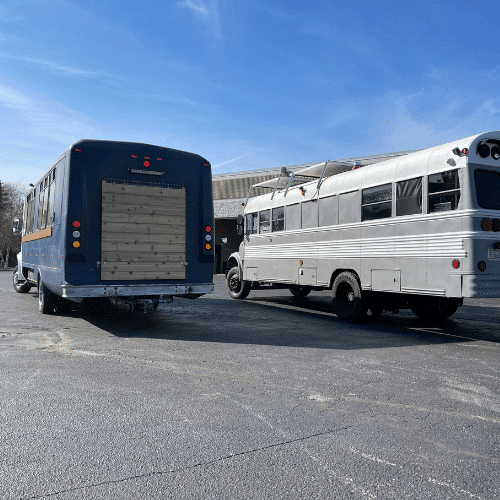
When choosing between steel and fiberglass for bus construction, understanding their properties is essential. Steel school buses are known for their durability and strength, making them highly resistant to impact and providing increased safety. However, their heavier weight can negatively impact fuel efficiency, leading to higher operating costs. Additionally, while steel is robust, it is susceptible to rust if not properly treated, requiring regular maintenance to prevent corrosion.
On the other hand, fiberglass shuttle buses offer a lighter alternative, which improves fuel efficiency and overall vehicle performance. One of the key advantages of fiberglass is its natural resistance to corrosion, reducing long-term maintenance costs. Additionally, fiberglass is a more flexible material that is not as resistant to impact as its counterpart.
When comparing the two materials, steel excels in strength and durability but requires more maintenance and is heavier. Fiberglass, while not as strong, offers better fuel efficiency and lower maintenance. Ultimately, the choice between steel and fiberglass depends on if you value strength and longevity or efficiency and lower upkeep.
Driving & Maneuverability of Skoolie vs Shuttle Bus
When considering a skoolie versus a shuttle bus, driving experience differs significantly.
Skoolies are generally longer and heavier, which can make them more challenging to maneuver in tight spaces. Their larger size may require extra attention during parking and navigating narrow roads.
Shuttle buses, typically smaller although not all the time, offer greater ease of movement. Their design allows for better handling in urban environments. This makes them a popular choice for those needing versatility in crowded areas.
Your comfort level driving each type may also vary. Skoolies often provide a commanding view, while shuttle buses can feel more car-like.
Considerations include where you plan to drive. If you expect to navigate urban areas frequently, a shuttle bus may be more suitable. In contrast, if you favor open roads and off-grid camping, a skoolie might be your choice.
Which One – Skoolie vs Shuttle Bus?
Choosing between a skoolie and a shuttle bus depends on your personal preferences, budget, and intended use. Skoolies offer more space for customization, making them ideal for those who want a unique, personalized living area. They also have a distinct charm and aesthetic appeal, often making them a favorite among full-time travelers who prioritize comfort and a homey feel.
On the other hand, shuttle buses tend to cost more upfront for the vehicle, but the bus is lighter due to the fiberglass construction which offers better fuel efficiency. Taking on a DIY bus build is always going to be a big undertaking, no matter if it’s a school bus or a shuttle bus.
When making your decision, consider how you plan to use the vehicle. If you’re looking to drive in more urban areas, a shuttle bus may be the way to go. Alternatively, a school bus might be a better fit if you’re looking to go into more remote areas as the weight and construction of the vehicle can get you there more so than a shuttle bus can.
Curious about living the alternative lifestyle but not completely sold on skoolies? Check out our other articles.

Join the Skoolie Livin Community!
Related Course
Skoolie Toilet Options
Get the complete overview of skoolie toilet options to help you decide which one is right for your desired skoolie lifestyle.
- 35 mins