1,527
Related Course
- 35 mins
Contents
ToggleSkoolie Toilet Options
The one course you need to help you decide which skoolie toilet is right for your desired skoolie lifestyle.
Looking to live a mobile lifestyle? Choosing between a skoolie and a van can impact your experience while traveling. A skoolie offers more living space and customization options, while a van provides greater stealth and ease of driving. Each option has its unique advantages depending on your needs and lifestyle preferences.
If you need or want a larger amount of space for amenities and comfort, a skoolie might be the right choice for you. On the other hand, if you don’t need much space and prioritize agility and parking convenience, a van could be a better fit.
Ultimately, both choices will lead to exciting adventures on the road. We’ll dive deeper into each of the different things to think about when choosing between a skoolie vs van including cost, mobility, space, and more.
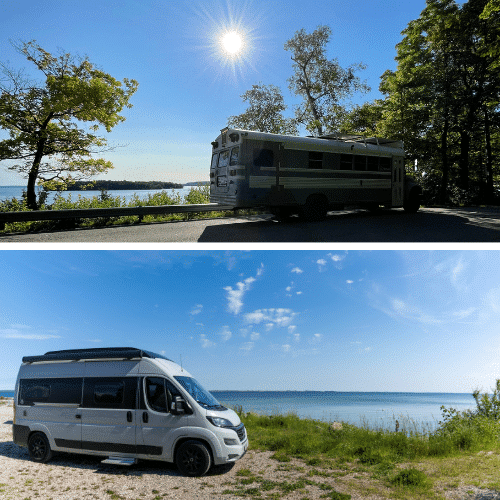
Cost Comparison
Cost is the first thing to consider when choosing between a skoolie vs van. Things like upfront purchase price, conversion costs, and long-term expenses will influence your decision.
Upfront Purchase Price
The initial cost of purchasing a skoolie typically ranges from $3,000 to $15,000, depending on its condition and age. In contrast, a van (used or new) can cost between $5,000 and $100,000, influenced by the year, make, model, and mileage. As you can see, school buses are generally easier to find at lower price points compared to vans. Vans sell for much more because they hold their value on the resale market (which we’ll touch on later in the article).
Conversion Costs
Conversion costs can vary widely depending on the level of customization and materials used. Generally, skoolie conversions are more budget-friendly, ranging from $10,000 to $30,000. This price includes expenses for insulation, plumbing, electrical systems, furniture, and appliances.
In comparison, van conversions tend to be more expensive, typically ranging from $15,000 to $100,000 or more. The compact space requires specialized designs, lightweight materials, and custom-built storage solutions, which drive up costs. Additionally, professional van builds with high-end finishes and off-grid capabilities can significantly increase the budget. So cost really depends if you are going to higher-out your van or DIY it. Chris and I have looked into both vans as well, we joke that components for a skoolie build cost $1,000 and everything in a van costs $2,000.
Long Term Costs
Long-term costs are items like insurance, maintenance, and fuel consumption. Skoolies can be more fuel-efficient, averaging around 8-15 miles per gallon, depending on size and engine type.
Insurance rates for skoolies are typically higher due to their size and the fact that they are usually DIY. In contrast, vans generally boast lower rates due to their smaller size and easier handling because a van is essentially just a vehicle, whereas a skoolie is a decommissioned school bus.
Maintenance also plays a critical role, with skoolies often requiring more repairs due to their larger systems. You also have to think about where you are able to take your skoolie. You’ll have to find a diesel mechanic willing to work on your bus or an International or Freightliner dealer (depending on your make), these are sparse on the road, whereas a Ford, Ram, or Mercedes dealer you can find with ease.
Space & Comfort
Both skoolies and vans offer unique benefits and challenges when looking at the space they provide and the comfort you can get from each option. Evaluating living space and available amenities you can get in both skoolies and vans will help you make an informed decision that best suits you.
Living Space
Skoolies typically provide more living space than vans due to their larger dimensions. A standard skoolie can range from 20 to 40 feet in length, offering plenty of room for various layouts. This allows for features like separate sleeping areas, a designated kitchen, and a living room, which create a home/apartment vibe.
In contrast, vans generally max out at around 20 feet and have limited vertical space. While some have cleverly designed layouts, they may feel cramped during prolonged use. A common design includes a convertible couch/bed and a compact kitchen, but this often sacrifices storage. Vans are more commonly referred as small micro campers. However, if you are going to be a weekender, a van actually may be better for you. Van life living is usually primarily indoor/outdoor living because of space constraints.
Amenities & Layout
Skoolies can accommodate full-size appliances, including ovens and refrigerators, making it not such a huge change from apartment or house living to skoolie living. You can customize layouts to include features like showers and toilets, significantly extending your off-grid capabilities. Working from home is super common so creating a space to work is pretty easy with the amount of room you get in a bus.
Alternatively, vans often prioritize essential amenities. You might find a small kitchenette and limited storage, which can restrict your ability to carry larger items. Many van owners opt for minimalist layouts to maximize space, which can be efficient but may not feel as spacious or comfortable over time.
Two great things to think about when looking at amenities and layouts of skoolies vs vans.
Mobility & Driveability
When choosing between a skoolie and a van, consider how each option affects your day-to-day driving and parking situations. Factors like size, maneuverability, and adaptability play a critical role in your travels. What are you willing to give up and what are non-negotiables?
Ease of Driving & Parking
Vans are generally more compact, making them easier to maneuver in urban settings. You can navigate narrow streets and tight parking spots much easier than you can a skoolie. If you are planning to a lot more city travel, maybe consider a van for this reason alone, or a short skoolie.
Skoolies can be a lot more challenging in city environments and even in parking lots. Their larger size requires more careful consideration for parking. You’ll usually have to find a pull-through parking spot and take up two spaces to park your skoolie while you go in for a workout or to grab some groceries. Maybe in some cases, you are even parking in one spot and walking across the street to go where you need to go because there may not be parking for large vehicles.
Off-Road & Stealth Capabilities
When it comes to off-road capabilities, vans often shine due to their lighter weight and smaller size. Many vans, especially those designed for adventure, come with four wheel drive options and can handle rough terrain better than skoolies. Skoolies, with their heavier build, can struggle off-road unless heavily modified. Vans are much more stealth than skoolies. A lot of them are camper vans, but at the same time a lot of vans are work vans. Whereas a painted skoolie, people can assume someone’s living in there. They don’t fit in to the “normal crowd”.
Legal & Insurance Considerations
When choosing between a skoolie and a van, legal regulations vary by vehicle type. Research zoning laws, especially for skoolies, as they may be classified differently than vans.
Registration
When we first registered our skoolie, it was classified as a truck. We had to remove lettering, the stop sign, and have an inside living quarter before we could register it as a mobile home. Law enforcement came out to inspect our skoolie, signed off, then we could go to the DMV to switch it to a motorhome. In most cases vans fall under standard vehicle registration, making the process much more straightforward.
Insurance
Insurance needs will depend on the type of vehicle and how it’s used. Skoolie insurance generally requires coverage for the bus itself, personal property, and liability. The extent of the conversion can also affect insurance rates and policy availability. Vans, on the other hand, usually fall under standard personal vehicle insurance policies. However, if the van is converted for full-time living, additional comprehensive, collision, and liability coverage should be considered.
Parking Regulations
Parking laws can vary significantly between skoolies and vans, especially in urban areas. Skoolies may face stricter regulations due to their size, with some cities restricting overnight parking or requiring special permits. It’s crucial to research local zoning laws and parking restrictions before settling in a new area. Vans generally have more flexibility when it comes to parking, particularly for stealth camping, but local regulations should still be checked to avoid fines or towing.
Understanding these legal aspects will help you make an informed decision about whether a skoolie or van is the right choice for your lifestyle.
Lifestyle Considerations

When choosing between a skoolie and a van, your lifestyle needs play a big role. So thinking about what you need and what you can live without in your mobile dwelling is how you’re going to know if a skoolie or a van will work better for you and your family.
Solo Travelers vs Families
If you travel solo, a van often provides a more maneuverable option. Vans are typically easier to park and can navigate narrow roads more effectively. This makes them suitable for individuals who prefer spontaneity and flexibility.
For families, skoolies tend to offer more space. You can create separate living areas, complemented by additional comforts like a full-sized kitchen and more storage. Families can benefit from the ability to accommodate children’s activities and the need for more personal space.
Full Time vs Part Time Living
Your living situation influences the choice between skoolies and vans, especially for full-time or part-time living. Skoolies are well-suited for full-timers with their larger living space and amenities. You can design a home that meets all your daily needs, including a bathroom and sleeping areas.
For part-timers, vans can provide a more economical and flexible solution. They are often easier to drive, making weekend trips or short vacations more accessible. Vans allow you to experience life on the road without the full commitment of a larger vehicle. However, this is not to say you can’t full-time live in a van because tons of people do it.
Customization & Personalization
Customization varies significantly between skoolies and vans. Skoolies allow for extensive modifications, from layouts to plumbing systems.
Vans also offer customization but usually within a more limited framework. You can install essential amenities, but the compact size restricts elaborate modifications. Consider your preferences for personal touches and how they align with the constraints of each vehicle type before making your choice.
Resale Value & Longevity
You can think of skoolies and vans as a place to call home while traveling, but you’ll also want to look at the longevity of the vehicle and potential resale value. You will essentially be adding value to both skoolies and vans if you buy them as raw vehicles and add living quarters to it.
Longevity varies based on usage and maintenance. Skoolies, built on robust bus chassis, and almost always, diesel engines, often last longer than standard vans. With proper care, a skoolie can serve you for decades. Vans, usually, gas engines, will last you a while.
Factors influencing longevity include:
- Build quality
- Care and maintenance
- Driving conditions
In summary, skoolies are larger vehicles offering more customization and not much of a drastic difference from house/apartment to skoolie in the way that all amenities are able to be had because of the space you have in a skoolie. While vans are much smaller, but they often appeal to a larger audience. Which will you choose? If you’re thinking about an RV, check out our Skoolie vs RV article too.

Join the Skoolie Livin Community!
Related Course
Skoolie Toilet Options
Get the complete overview of skoolie toilet options to help you decide which one is right for your desired skoolie lifestyle.
- 35 mins